

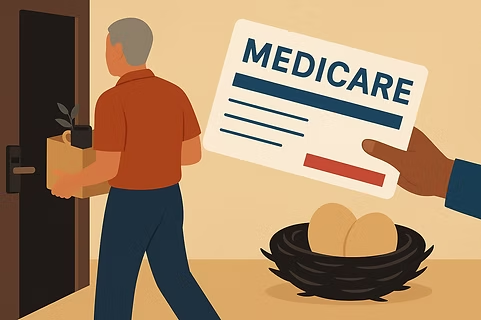
You’ve just handed in the office key card, the coffee mug with your name on it is boxed up, and you're ready to greet retirement at 62. Freedom feels fantastic, until you remember...that Medicare doesn’t start until age 65.
Those three little years can create one big health care funding hole. No need for heartburn (unless it’s from your famous spicy chili). Let’s walk through some common missteps and five practical ways to help keep medical bills from raiding your nest egg.
The Hidden Challenge
Many early retirees assume their workplace plan will magically follow them into retirement or that private coverage will be reasonably priced. In reality, employer subsidies vanish, premiums balloon, and one unexpected surgery can ding a portfolio faster than a bear market.
In fact, a growing number of retirees are leaving the workforce before 65, creating a potentially pricey coverage gap. What are your options for staying insured without torching your retirement budget?
Don’t Fall for These Common Pitfalls
Many early retirees run into trouble by assuming COBRA lasts until 65, overlooking ACA subsidies, or waiting too long to explore coverage options. Others skip over the chance to join a working spouse’s plan or don’t realize how income affects ACA premiums. These missteps can lead to steep costs or worse, a coverage gap when you need it most.
Five Practical Routes to Consider:
1. COBRA (Consolidated Omnibus Budget Reconciliation Act)
You can keep your former employer’s health plan for up to 18 months (sometimes 36 months depending on the situation) by paying the full premium plus a 2 percent admin fee. It’s convenient, you keep the same network and coverage, and there’s no paperwork reshuffle. But watch out - COBRA can get expensive fast without the employer subsidy.
2. ACA Marketplace Plans
Thanks to the Affordable Care Act, early retirees may qualify for income-based subsidies on health insurance. A mid-level Silver plan could be surprisingly affordable depending on your taxable income. Compare Bronze, Silver, and Gold tiers carefully. Lower premiums may come with higher deductibles, which might not make sense if you actually use the plan.
3. Join a Spouse’s Plan
If your spouse is still working, hopping on their employer-sponsored plan is often the simplest and most cost-effective move. Be sure to check on enrollment windows and whether any spousal surcharges apply.
4. Part-Time Work With Benefits
Some national retailers, hospitals, and even financial companies offer health insurance to part-time workers logging 20 to 30 hours a week. If you don’t mind staying engaged, it’s a great way to pad your cash flow and snag health coverage while keeping structure in your days.
5. Tap Into Your HSA
If you’ve built up a Health Savings Account, this is your moment. HSAs offer triple tax advantages: contributions are deductible, growth is tax-free, and qualified withdrawals for medical expenses stay tax-free. That offers serious firepower for covering premiums, deductibles, and out-of-pocket costs before Medicare arrives.
5-Star Tip: Keep an eye on your MAGI (Modified Adjusted Gross Income). ACA subsidies are highly sensitive to income thresholds - sometimes within just a few dollars. Timing IRA withdrawals, capital gains, and Roth conversions carefully can mean the difference between a generous subsidy and a sky-high premium. A few minutes of tax planning could save you hundreds per month.
Why Work With a Fee-Only Fiduciary?
Let’s be honest: figuring out COBRA deadlines, ACA enrollment windows, and MAGI math isn’t anyone’s idea of retirement fun. That’s where a fee-only fiduciary planner comes in.
We sit on your side of the table, obligated to act in your best interest (no product pushing, no commissions). Together, we can build a retirement strategy that blends smart tax moves, sustainable income, and the right health coverage to help your golden years stay golden.
Curious if I can help you bridge the gap?